Tulveris
Start where you are
Step-by-step bamboo splitting tutorials for every skill level
We break every technique into clear stages so you can follow along at your own pace.
From your first split to your first finished basket, each tutorial builds on what you
learned before.
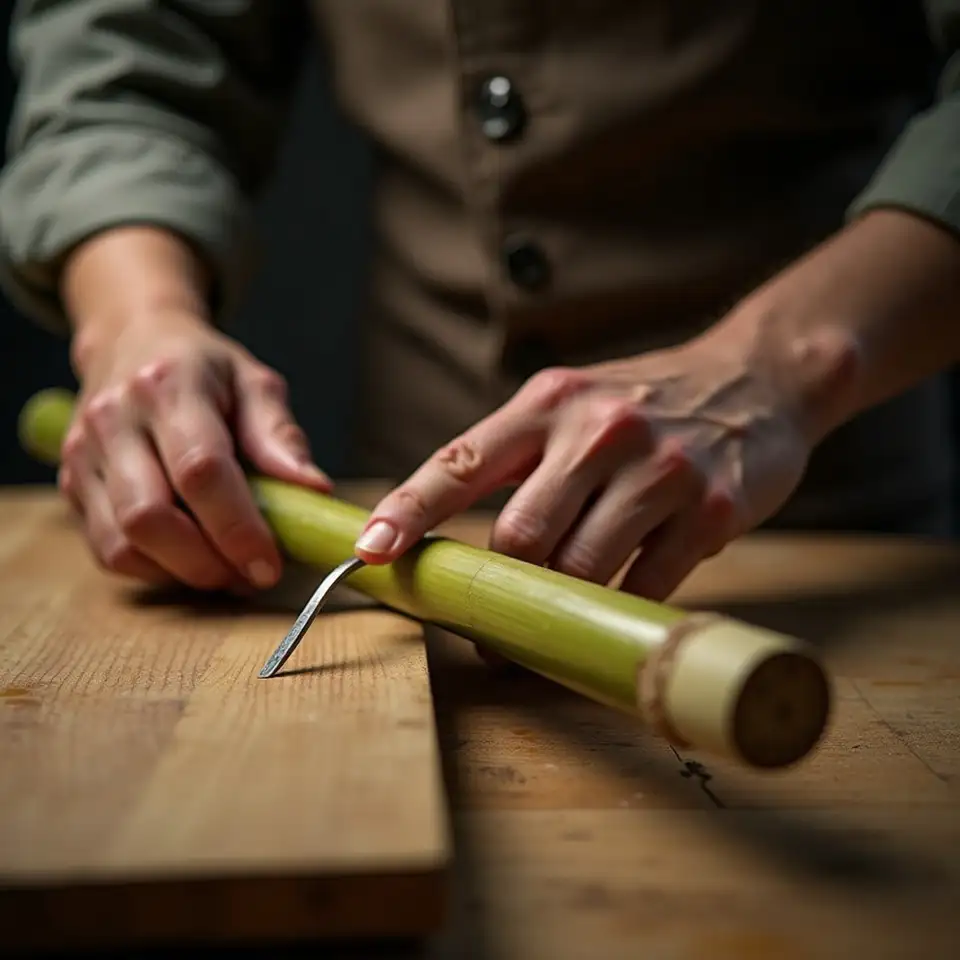
Learning paths that match your level
Beginner basics
Start with the fundamentals: how to hold the blade, how to read the grain, and how
to make your first clean split. These tutorials assume you have never touched bamboo
before. We focus on safety, posture, and building the muscle memory that makes
everything else possible.
Intermediate techniques
Move beyond simple splits into controlled shaving, even strip width, and basic weave
patterns. You will learn to correct mistakes mid-cut, adjust for material variation,
and prepare bamboo for more complex projects.
Advanced projects
Tackle full baskets, patterned mats, and lidded containers with confidence. These tutorials integrate multiple skills into cohesive projects and teach you to plan your work before the first cut.
Expert advice for better results
Choosing your first knife
A short blade with a comfortable handle is enough to begin. Expensive tools do not replace practice, and many experienced makers still prefer simple knives they have learned to trust.
Sourcing quality bamboo
Look for mature culms with tight nodes and straight grain. Avoid poles with cracks, mold, or excessive branching. Freshly harvested bamboo is easier to split than dried stock.
Avoiding common mistakes
Beginners often rush the first split, angle the blade too steeply, or ignore the grain
direction. Slow down, watch how the fiber separates, and adjust your approach with each
cut.
Preparing your workspace
A stable block, good light, and a clear surface make a noticeable difference. You need room to move the pole freely and a place to set finished strips without tangling.
Checking strip consistency
Run your fingers along each shaved strip to feel for uneven thickness. Consistent strips weave more cleanly and produce a more professional final appearance.
Managed bamboo stands, garden suppliers, and specialist nurseries are good sources. Choose mature culms with straight grain and minimal branching. We cover selection criteria in detail in our beginner tutorials.
Most beginners complete a simple split within their first hour of practice. The challenge is not complexity but patience. Consistent practice over several sessions builds the confidence needed for finer work.
Yes. Our beginner tutorials assume no background in crafts or woodworking. We explain every step in plain language and provide photographs that show exactly what your work should look like at each stage.
A simple mat or small basket usually takes between three and eight hours across multiple sessions. We encourage breaking work into stages rather than attempting to finish in one sitting.
Uneven splits usually mean the blade angle was inconsistent or the grain direction was misread. Our troubleshooting tutorials show you how to diagnose the cause and adjust your technique for the next attempt.
A sharp splitting knife, a wooden block for support, and a measuring tool are enough for your first sessions. We recommend starting with simple equipment and upgrading only after you understand what each tool actually does.